
Health Quest I: Invasion of the UPFs
The food industry uses psychological systems that target your base desires, but resistance is not futile. Here are the defenses you can wield right now to defend against the onslaught of zombie foods.
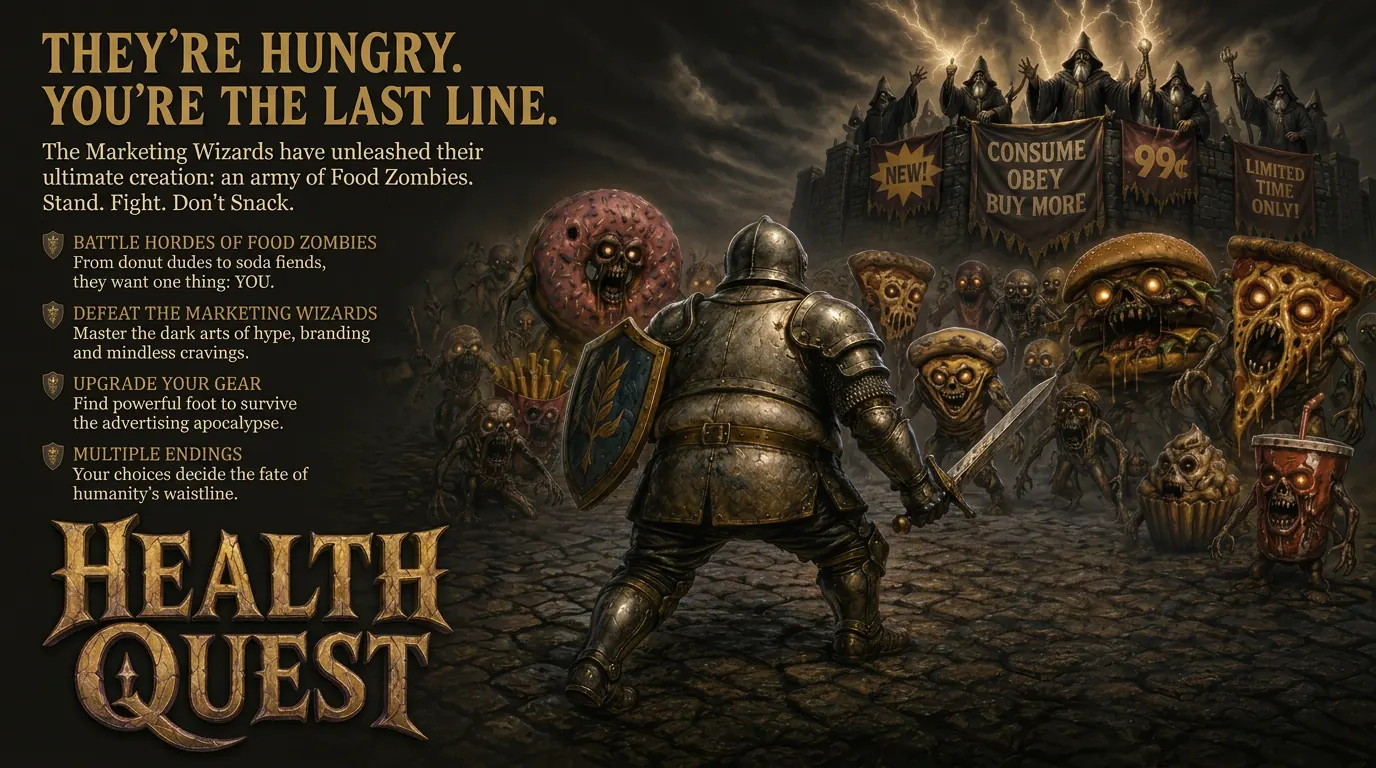
Yes, as my last post showed, it is absolutely not your fault that our current social environment causes obesity. But you are not destined for metabolic disaster! Although the food industry uses psychological systems that target your base desires, resistance is not futile. Defenses are, right now, at your disposal that can deflect their advances and defend against the onslaught of zombie foods overwhelming our metabolic lives. These tools can be exceptionally powerful, and you can wield them immediately while questing for your health.
Part I: Your home is your castle
Your health crusade begins with castle defense. Modern food hordes look for any vulnerability to exploit, because they are most effective when they’re inside the citadel’s walls. Our strategy for winning our metabolic war must include strict boundaries over what food enters our home. The struggle will be difficult, with the 24-hr marketing blitz on personal electronic devices and the ease with which food apps and delivery services can bypass border controls. Of course, sometimes your household is shared with family, roommates, or others who might have a different food agenda than you. In these situations, communication and creative compromise are key. Try setting up designated shelves or spaces for "safe" foods and politely ask others to keep tempting treats out of sight, or even outside of shared spaces if possible. Consider working together on clear house agreements or team up for healthier eating challenges, like cooking a healthy meal together once a week. Stand fast, you are the general in command! Just the act of purging your pantry of sewer chow clears the way for clean cuisine.
Castle rules
#1 Ultra-processed food (UPF) is not welcome here.
Just. Say. No. “Covert control” is imperative for success, UPF are not the foods you are looking for, so don’t let them in through the gates. Because the opposite, or “overt control,” permissiveness (some junk stays at home), invariably results in actually eating more. You pavlovianly crave food at home simply because it's there! We've all been there: simply thinking about the last lonely few scoops of ice cream in the freezer triggers an inexplicable longing to eat! That yearning for the available forbidden fruit is overpowering. Its complete absence shields you from being lured by its siren call.
Book a free 30-minute call. No pressure, just an honest conversation.
#2 You eat what you see, display what you should eat.
Make fruits, veggies, and nuts visible and accessible, out of the pantry or the fridge and into plain sight. If you're getting a snacking craving and there's a handful of salted nuts available, great! Go for them! There's a nice ripe apple on the countertop? Chow down! No one has ever looked at the bottom of an apple bowl and seen a few crumbs and decided to eat an entire apple's worth of crumbs. Besides the fact that bowls of apples have no crumbs, apples are perfectly sized snacks. On the other hand, potato chip bags (even small bags contain 2–3 “servings”) are grenades of excess, an open potato chip bag is an empty potato chip bag. Besides, if you mix #1 with #2, there will be no snacking on potato chips at 10:00 at night.
#3 Be strategic with your shopping.
Be like Santa: make a shopping food list, check it twice, don't add food that's naughty, just add food that's nice. Move through the grocery store with tactical precision. Grocery stores are UPF minefields designed to manipulate you into buying stuff you don’t need but impulsively need. (Ever notice that it’s easier to buy a bag of potato chips than lose the weight you gained from eating them?) Pro tip: Shop when you’re full. Your strategy is easier to maintain when you’re not so hungry that anything in a bright bag makes you drool. Flank the endcaps and shop the store’s periphery, and blitz straight to the section where the food you need is!
“Know before you go.”
Former military, strength athlete, and physician who rebuilt his own health after struggling with weight through training and residency. Dr. James writes about the real causes of chronic disease and what it actually takes to fix them.
More from the blog


Ready to stop being managed and start getting better?
Request a free 30-minute call. A member of the Olympus team calls you within one business day.
Request a call