

Introduction to Insulin Resistance and Chronic Metabolic Disease
The excess of endogenous insulin our body releases in response to food, and the inability to properly respond to that insulin over time, is the phenomenon that fuels the majority of problems we associate with the failing health of the modern person.
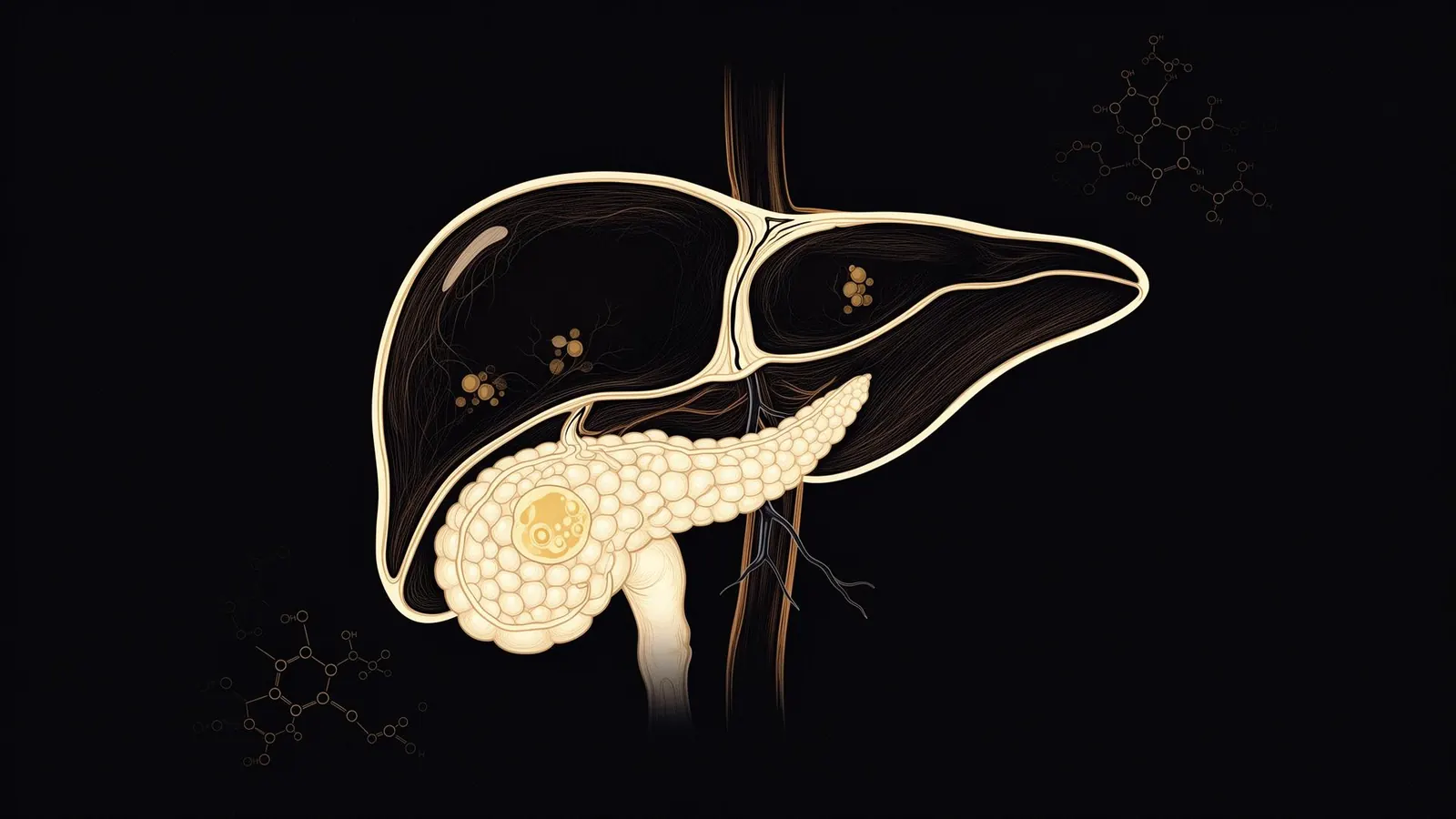
The heart of our work is in education. Consequently, aside from the clinical work we do, we make it a point to spend time teaching how your body works so that you can better navigate your health, with or without us. This article will be the first of a multi-part series covering metabolic syndrome. This topic was selected because the excess of endogenous insulin that our body releases in response to food, along with the inability to properly respond to that insulin over time, is the phenomenon that fuels the majority of problems we routinely associate with the failing health of the modern person.
Key Concepts, Start Here
In this first lesson let's start by introducing some of the key pieces of information that you'll need to know as we move forward. Understanding these players will make everything that follows click into place.
Book a free 30-minute call. No pressure, just an honest conversation.
What Happens After You Eat?
Note that the process outlined below will be deliberately simplified for clarity. In truth many of these systems are less sequential than they appear and more like various processes colliding at different intervals. For the sake of factoring out the beautiful chaos that is biochemistry, I am making a choice to present the steps with a focus on the key players mentioned above.
After you swallow a bolus of food it travels down the esophagus into your stomach. Once in the stomach the food is churned up, broken down, and mixed with gastric juices and enzymes in order to become a sort of homogenized liquid that can be steadily siphoned into the small intestine. As food enters the small intestine it mixes with other juices released by your pancreas in order to be ready for absorption into the blood. Parallel to this process the pancreas is also releasing insulin into the bloodstream so that it has time to reach all of our various tissues so that they're ready to receive the incoming delivery of resources. With insulin in the blood the body is set up to take in all the good stuff, with preference given first and foremost to the brain, followed by muscle, then all the other organs, then adipose.
After the food slurry gets absorbed by the intestines it first goes to the liver for filtration and processing. The liver takes some small cut of what's available to fuel itself then pushes the remainder along into the bloodstream. At this point the carbohydrates from your meal are now freely floating in the blood as glucose. The fat from your meal, bundled together with cholesterol inside of lipoproteins like LDL, is also released into the blood so that it can be picked up by whatever tissues need it.
Skeletal muscle is tremendously hungry for glucose and takes a large portion of the available sugars. On the surface of the muscle cell there are insulin receptors set up so that when insulin molecules make contact, it triggers a cascade that results in the cell activating proteins called GLUT4 receptors, specialized gateways that traffic glucose into the cell. Note that without insulin and insulin receptors, most cells do not have a way to take in glucose. The skeletal muscle takes that glucose to make ATP, the actual final form of our fuel that is ready to use. Once it has enough ATP, the muscle takes a bit more glucose and converts it into a stable storage form called glycogen. Once ATP and glycogen stores are topped off, the individual myocytes begin to deactivate their GLUT4 receptors so that some other hungry cell can get its share.
This process continues on with minor variation for each cell in our body. Once the body is topped off and acute energy demands are met, the excess fuel goes back to the liver where it can be made into fat and glycogen for storage, then once again shipped out into the blood to reach its long-term storage site: adipose.
When the Tank Is Full
In adipose it is honestly much of the same story. Insulin hits the adipocyte, IRS signaling proteins activate GLUT4, GLUT4 facilitates the entry of glucose while lipoproteins incorporate into the cell membranes. All is good and well…
“…until there is no more room.”
In the same way that muscle tissue gets full and shuts down the ability to take in more sugar, our fat cells also reserve that capacity. The fat cell simply has far greater capacity to hold and store than muscle, but a "far greater capacity" is not the same as an infinite capacity.
Consider the similarities between oil and natural gas of industry with the fat and carbohydrates that fuel our bodies. All of these fuels are hydrocarbons, and both are prone to oxidation which, as it occurs, can damage surrounding structures if the reaction occurs chaotically. In the same way combusting oil and natural gas releases energy to perform meaningful work, oxidizing fats and sugars releases energy which we use to perform meaningful work. In the same way that oil and natural gas need to be safely processed, transferred, and burned in order to harness their energy, our fats and sugars have to be processed carefully so that all that stored energy is directed towards meaningful processes rather than chaotically burning up our tissues.
“In the same way that combustion sets our fuels aflame, oxidation, when it occurs inside us, creates regions of inflammation. Sometimes English is cool.”
When our body starts to lose the space to safely store fat and glucose, it starts to resist the insulin signal. This process occurs locally such that "hungry" tissues are sensitive and "fed" tissues are resistant. That being said, when the entire body is topped off and collectively saying "we're good", that brings us to the situation where we have all this fuel floating around with nowhere to go.
↓ The presence of excess fuel with nowhere to go, and the various maladaptive events that follow, will be the focus of Part 2. We will continue the story and walk through how the body tries to work around all this fuel, and how those processes create the common pathway that connects high blood pressure, heart disease, diabetes, obesity, and fatty liver disease into the meta-problem that is metabolic syndrome.
Martial arts practitioner, StrongFirst kettlebell instructor, and physician focused on metabolic health and performance medicine. Dr. Dante writes about the intersection of clinical medicine, movement, and the science of building a body that lasts.
More from the blog



Ready to stop being managed and start getting better?
Request a free 30-minute call. A member of the Olympus team calls you within one business day.
Request a call